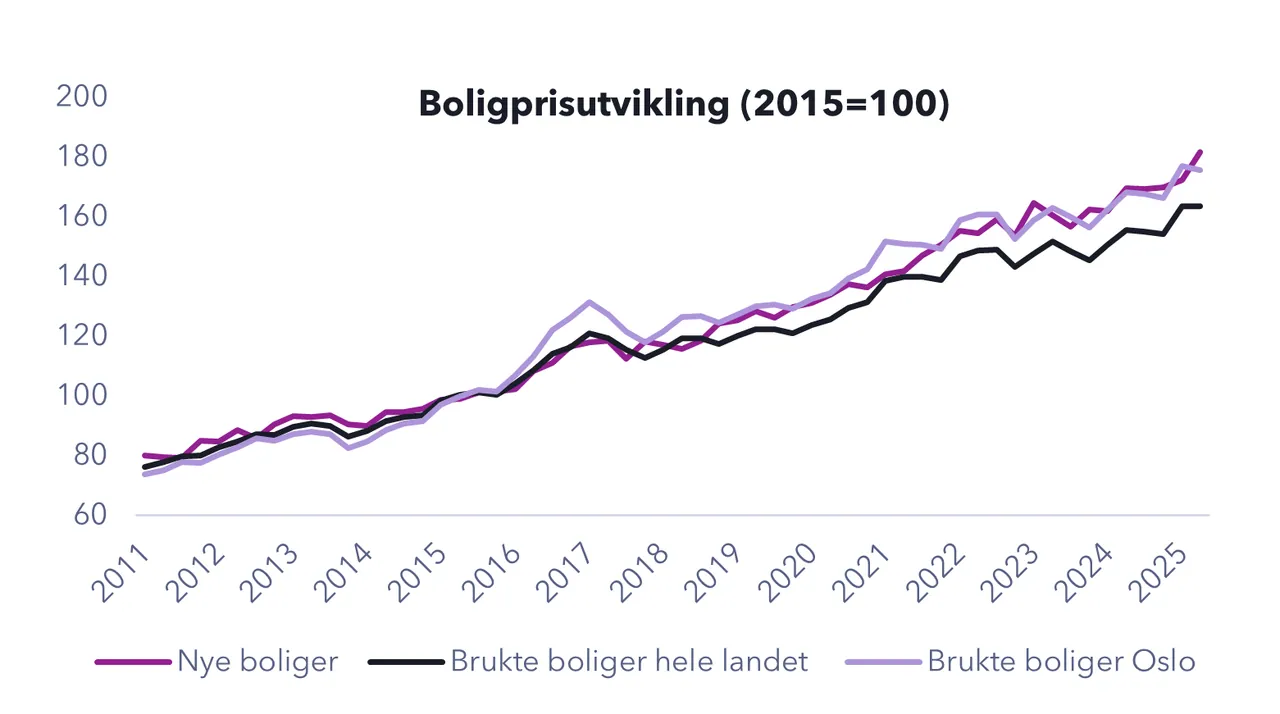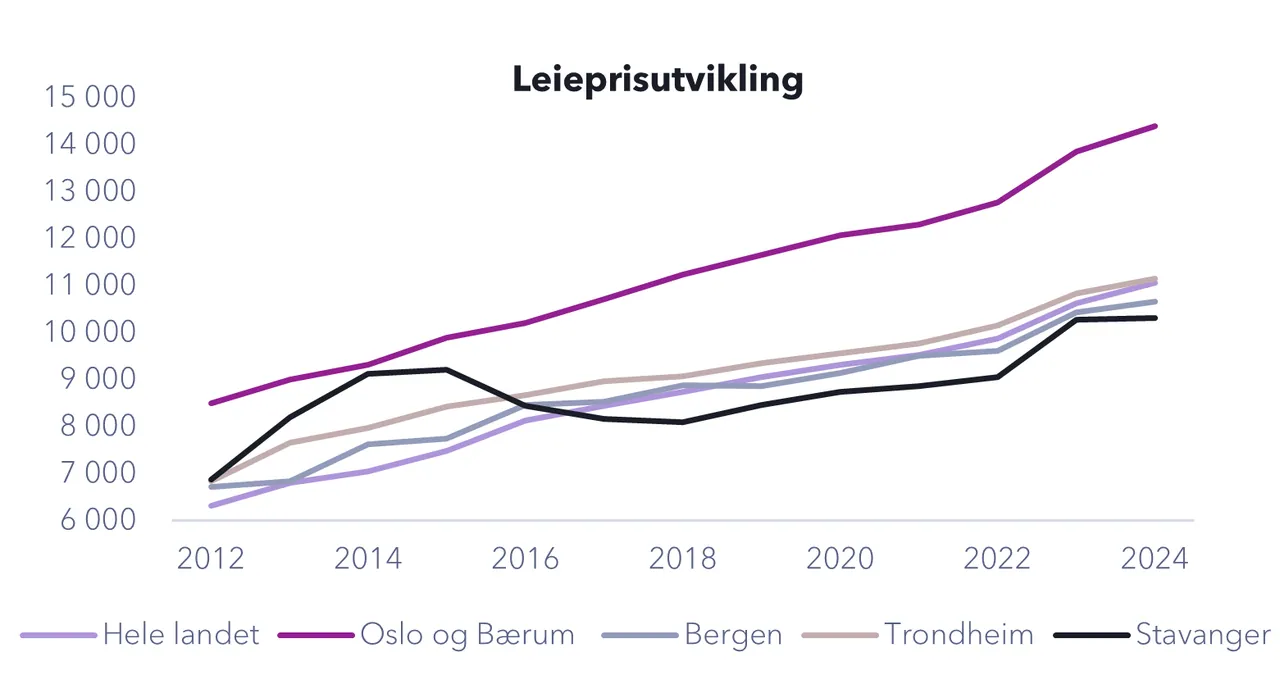
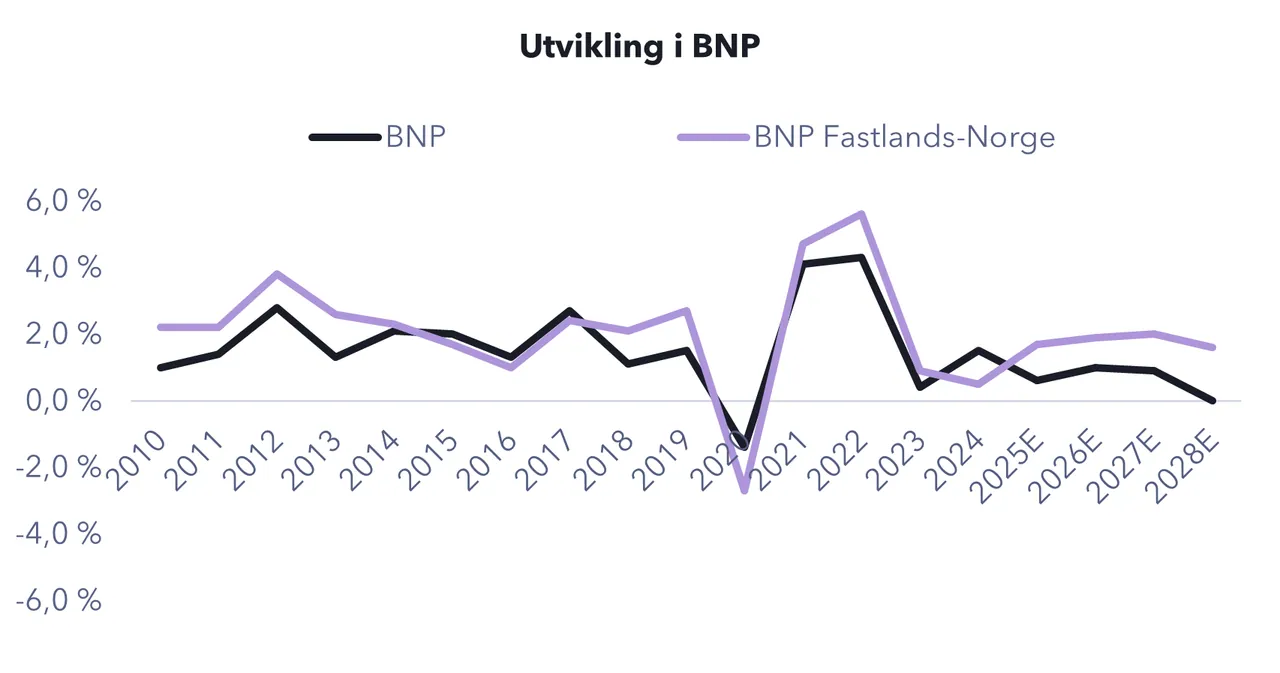
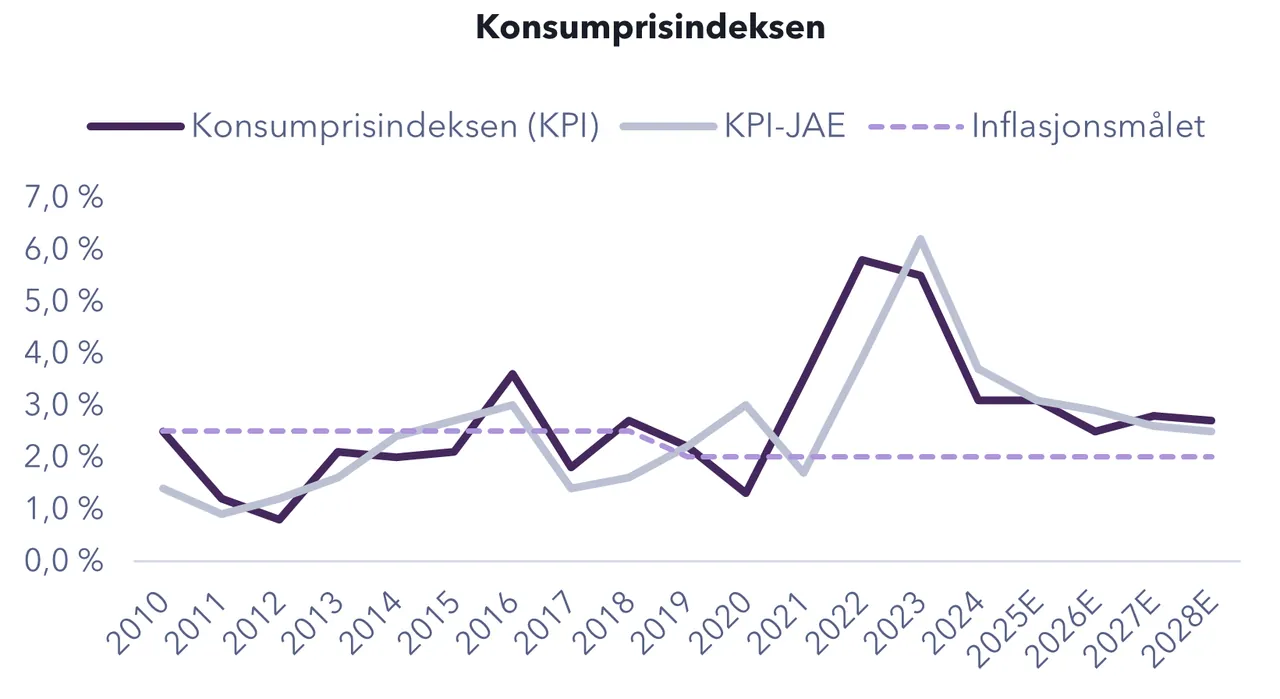
Charts are reproduced from the original Norwegian report.
Macroeconomics
The Norwegian economy has recently developed somewhat more weakly than Norges Bank had previously assumed. At the same time, unemployment has shown signs of rising, as measured by both NAV and the Labour Force Survey (LFS), and although the number of vacancies is historically high, the trend is now pointing downwards. According to Norges Bank's Regional Network, the availability of labour has improved somewhat, indicating lower capacity utilisation in parts of the mainland economy, particularly in manufacturing, oil supply and parts of the service sector.
GDP growth was weaker in the third quarter, and output growth in the oil and supply industry is expected to slow further as the effects of the oil tax package are phased out. At the same time, household-oriented industries are showing increasing activity, supported by improved purchasing power and lower inflation. This points towards a more balanced relationship between supply and demand and reduced domestic price pressures.
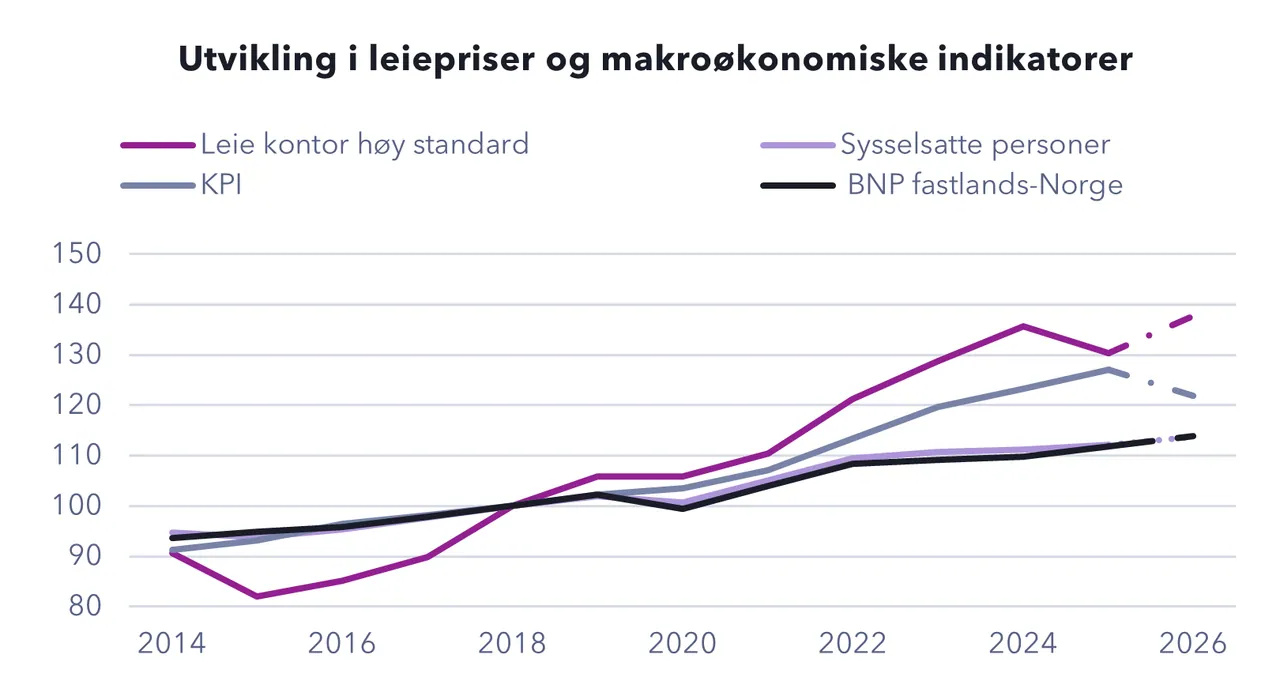
As the chart on the right shows, the consumer price index has been relatively stable over the past year. In November, both CPI and CPI-ATE fell to 3.0 per cent. Underlying inflation, driven by Norwegian-produced goods and services, remains relatively high, but is gradually approaching levels more consistent with the inflation target. GDP growth is estimated at around 0.4 per cent in the current quarter, with prospects of somewhat weaker development towards 2026. Despite rising market expectations of rate cuts, Norges Bank is expected to pursue a wait-and-see monetary policy, with further decisions depending on developments in the labour market and how quickly underlying inflation subsides.
The labour market
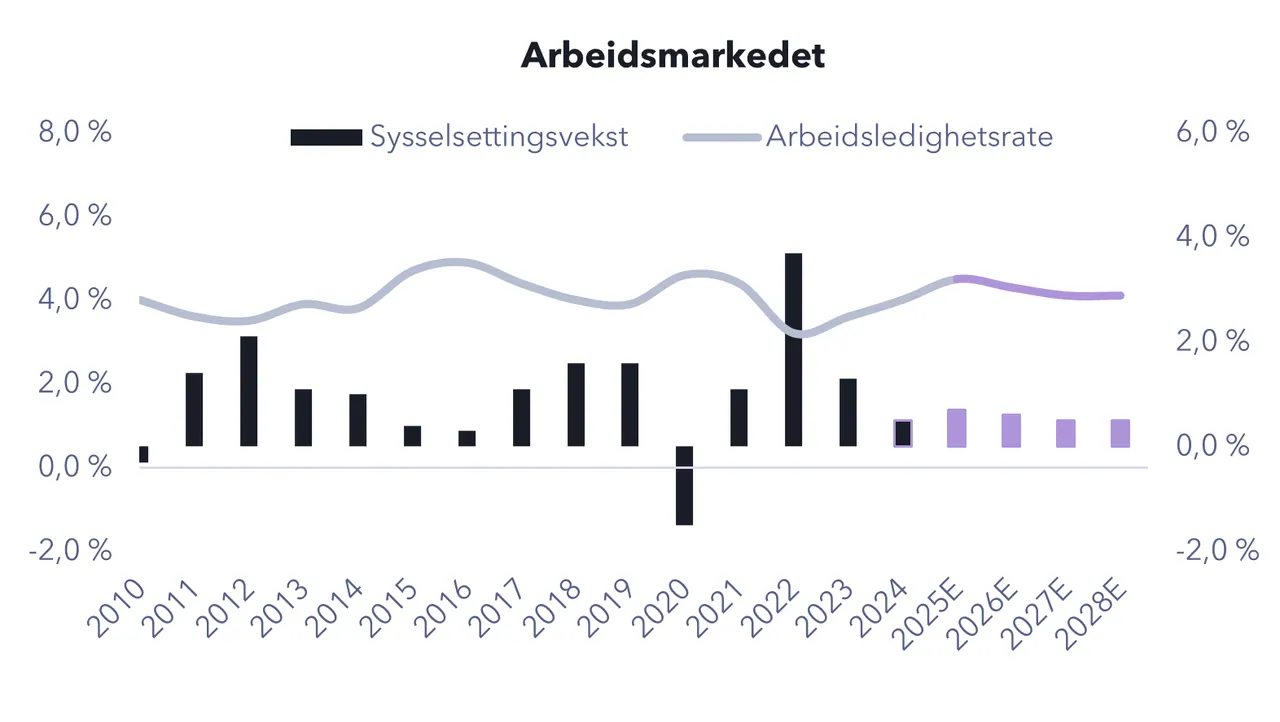
The labour market is showing signs of a slight rise in unemployment, while the level of activity remains relatively high. NAV's seasonally adjusted figures for November show that the share of wholly unemployed has risen to 2.2 per cent of the labour force, while unemployment as measured by the LFS has risen through the year and stabilised at around 4.7 per cent. The discrepancy between the two measures is probably due to a persistent mismatch between the skills demanded and those available, rather than lower demand for labour. The number of advertised vacancies remains high, up approx. 8 per cent year on year, but the trend is now pointing downwards. Surveys of NHO member companies and Norges Bank's Regional Network show a clear preponderance of businesses expecting to reduce rather than increase headcount over the coming six months.
The interest rate market
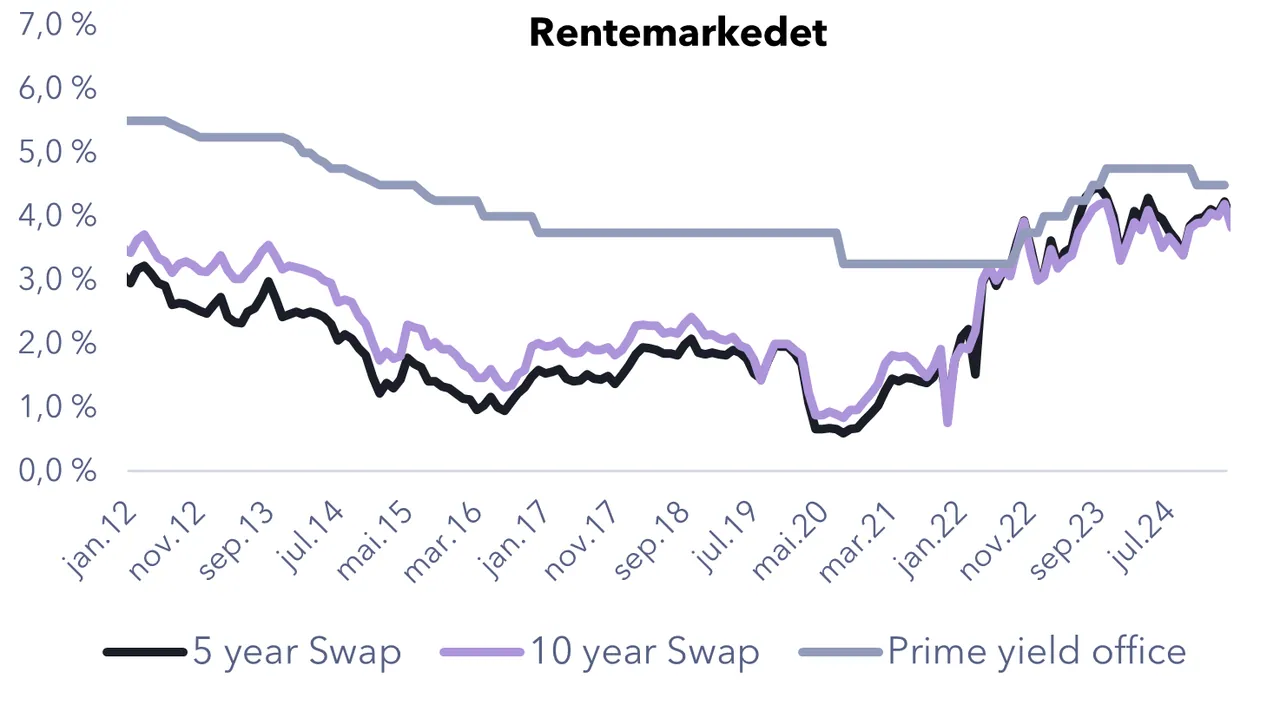
Norges Bank decided to cut the policy rate by 25 bps in both June and September, bringing the policy rate to 4.0 per cent. Somewhat weaker macroeconomic indicators and employment prospects have contributed to Norges Bank signalling further rate reductions. The rate path implies two further cuts during 2026. The rate path is thus relatively unchanged from previous years, and a gradual normalisation of interest rates is expected in the coming years. Depending on economic developments, the range of outcomes is essentially one or two rate cuts. Long-term rates have remained relatively stable recently, with both five- and ten-year swaps at around 4 per cent. Further developments will depend largely on the inflation outlook and international interest rate impulses.
THE PROPERTY MARKET
The transaction market
The transaction market has been somewhat cautious through the year, partly due to relatively high swap rates. Rates have stabilised somewhat and are slightly above 4.0%, while high market activity has been recorded towards the end of the year. There is, however, a risk that several of the ongoing transactions will be completed in 2026. At the beginning of December, transactions worth close to NOK 55 bn had been registered. The volume is somewhat lower than last year, but with the potential for a very strong finish to the year if several ongoing processes are completed around the turn of the year, and total transaction volume is expected to end north of NOK 80 bn.
The yield gap has long been below the historical average. This contributes to a more cautious and selective market. Access to financing is, however, good for players with stable cash flows, solid tenants and attractive locations. The banks report increased willingness to lend, stronger competition and ambitions for growth. Projects with high risk or brown buildings, however, face greater resistance in the form of higher equity requirements.
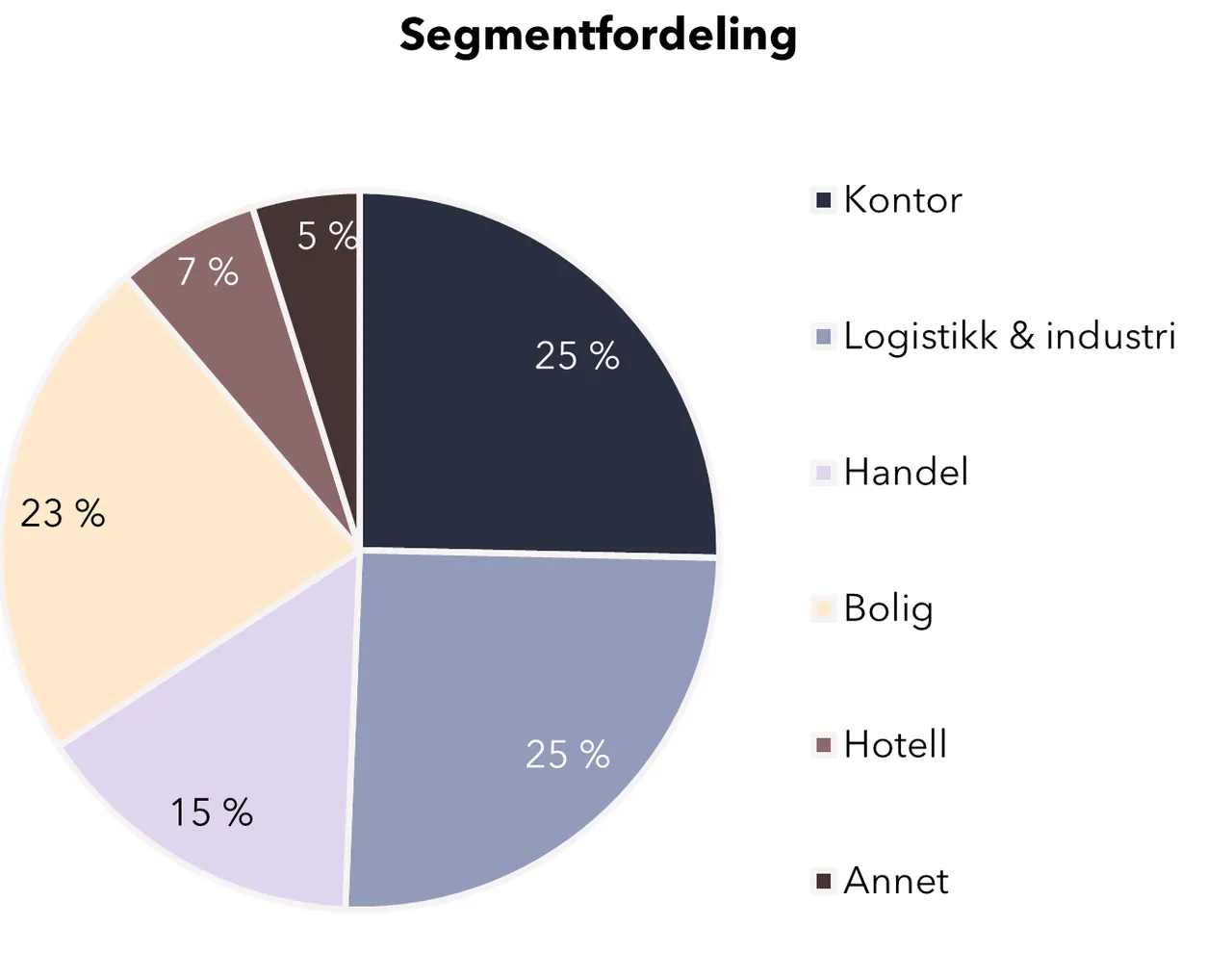
The market continues to be dominated by equity-rich players and institutional investors. Residential has been by far the largest segment this year, driven by, among other things, larger portfolio acquisitions. Logistics has a moderate transaction volume but broad investor interest, while office property is below previous years' levels, with the most activity in the CBD. Retail, on the other hand, accounts for almost the same share of total transaction volume as last year. These developments reflect a market in which investors are increasingly seeking value-add properties and properties in central locations.
The office market
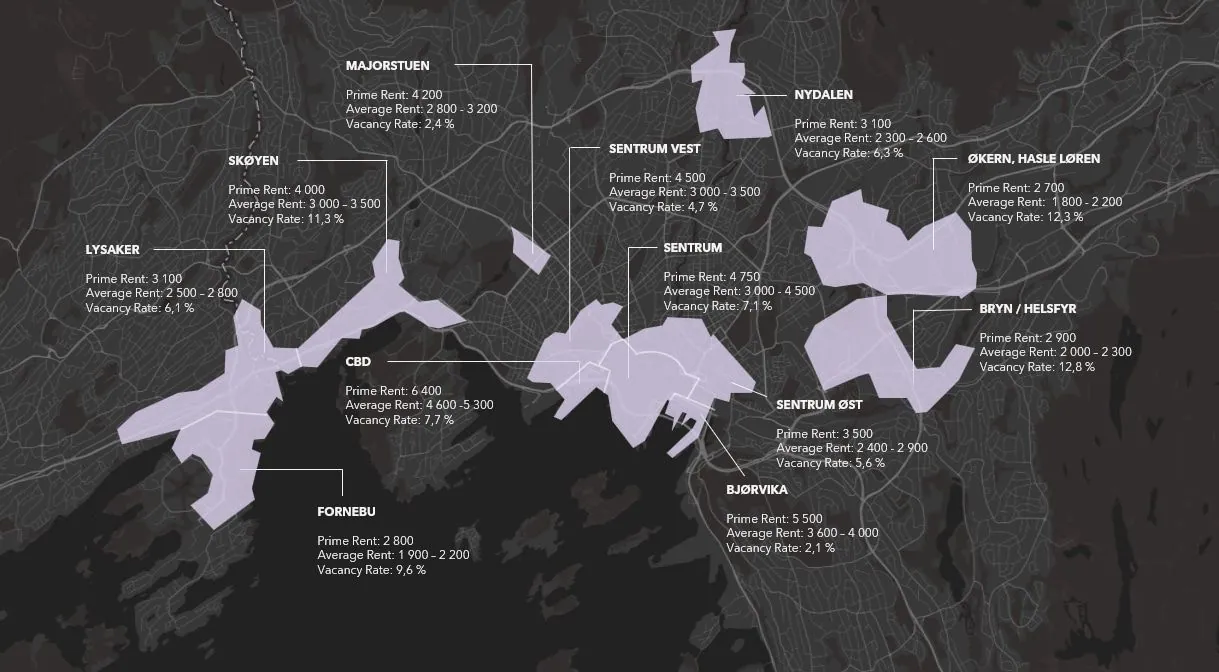
Despite moderate demand, rents have continued to rise, particularly in central locations. This is mainly due to high construction costs and strong demand for modern, energy-efficient buildings. Rental growth is greatest in the prime segment, where competition for the most attractive premises remains high. Outside the city centre, developments are more varied, and rent levels are driven to a greater extent by differences in standard between buildings.
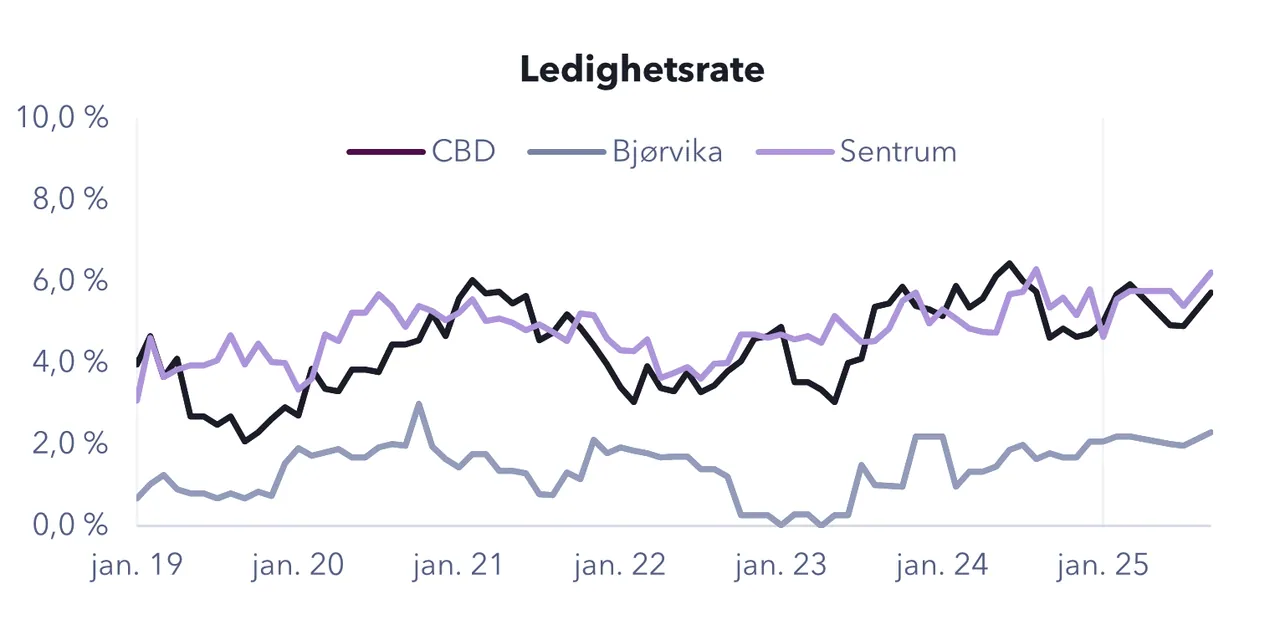
The Oslo office market is characterised by lower letting activity and rising vacancy. Demand has been subdued throughout the year, and office vacancy has risen to around 7.5 per cent, with increases across the various submarkets. Employment growth in the Oslo region has been weak, but there are signs of some improvement in office-based occupations, and together with expected growth in other sectors this could contribute to increased demand in 2026. Even with some improvement, supply in the market is high and tenants have many alternatives to choose from.
New construction remains low, with few confirmed projects for 2026 and 2027. This lays the foundation for vacancy to gradually stabilise through 2026, assuming moderate employment growth. Rental growth is expected to be low in peripheral areas, while growth in central locations is also expected to slow.
The logistics market
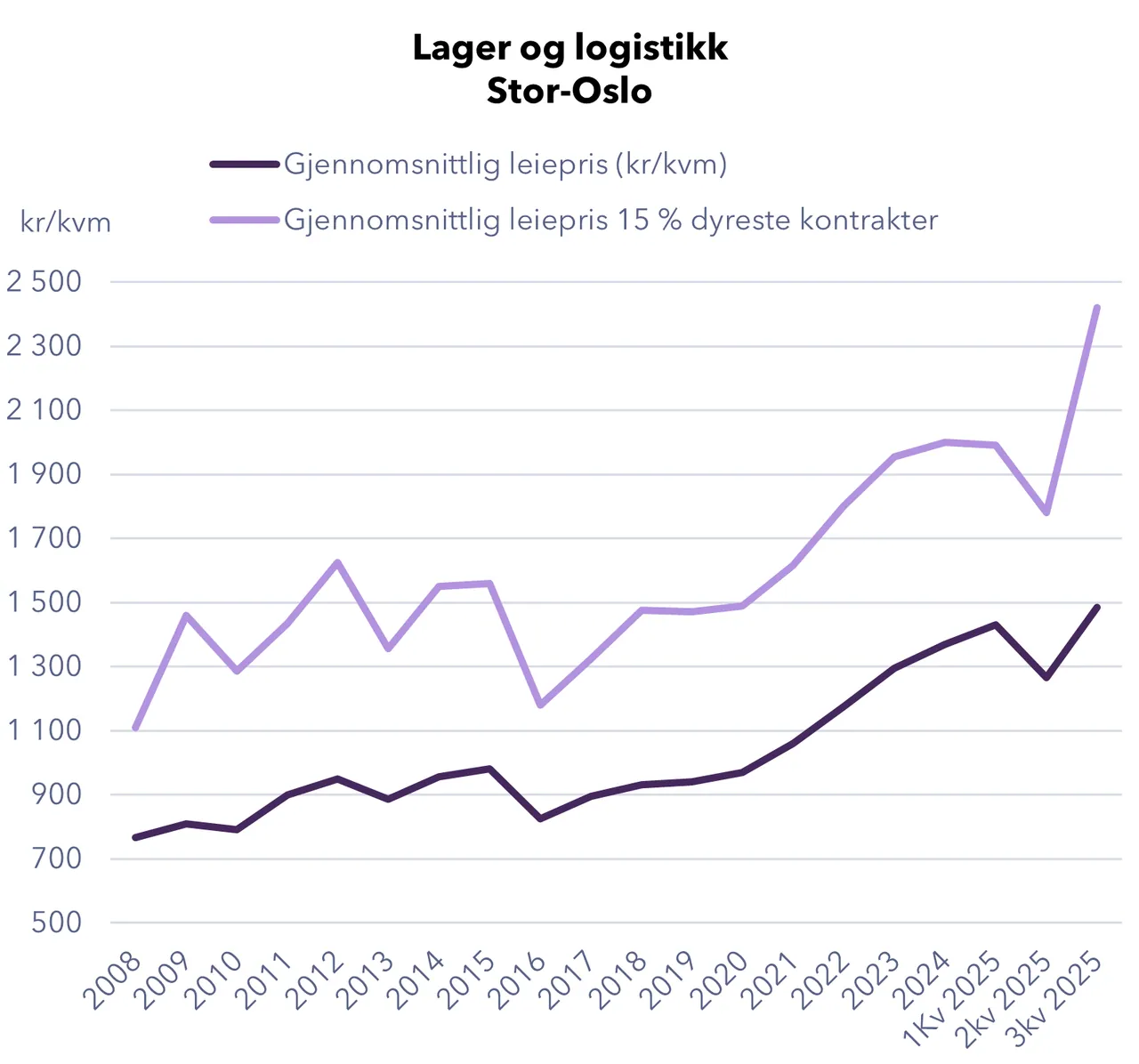
The warehouse and logistics market has picked up through 2025 after a weak 2024. Letting volumes are now above last year's level, and demand is expected to pick up further. The increased activity suggests that growth may gradually pick up during 2026, particularly in the most sought-after areas in and around Oslo, partly due to a shortage of sites.
Rents have mainly moved sideways, but with a sharp upturn in the last quarter. This is attributable to low volumes combined with certain special-purpose buildings that pull the average rent up sharply. Rents are therefore expected to fall back somewhat over the next few quarters.
A shortage of sites with significant development potential, combined with high construction and financing costs, means that the rents required exceed current market levels and keeps new construction activity down. The projects that do go ahead may, however, help lift prime rents in selected markets.
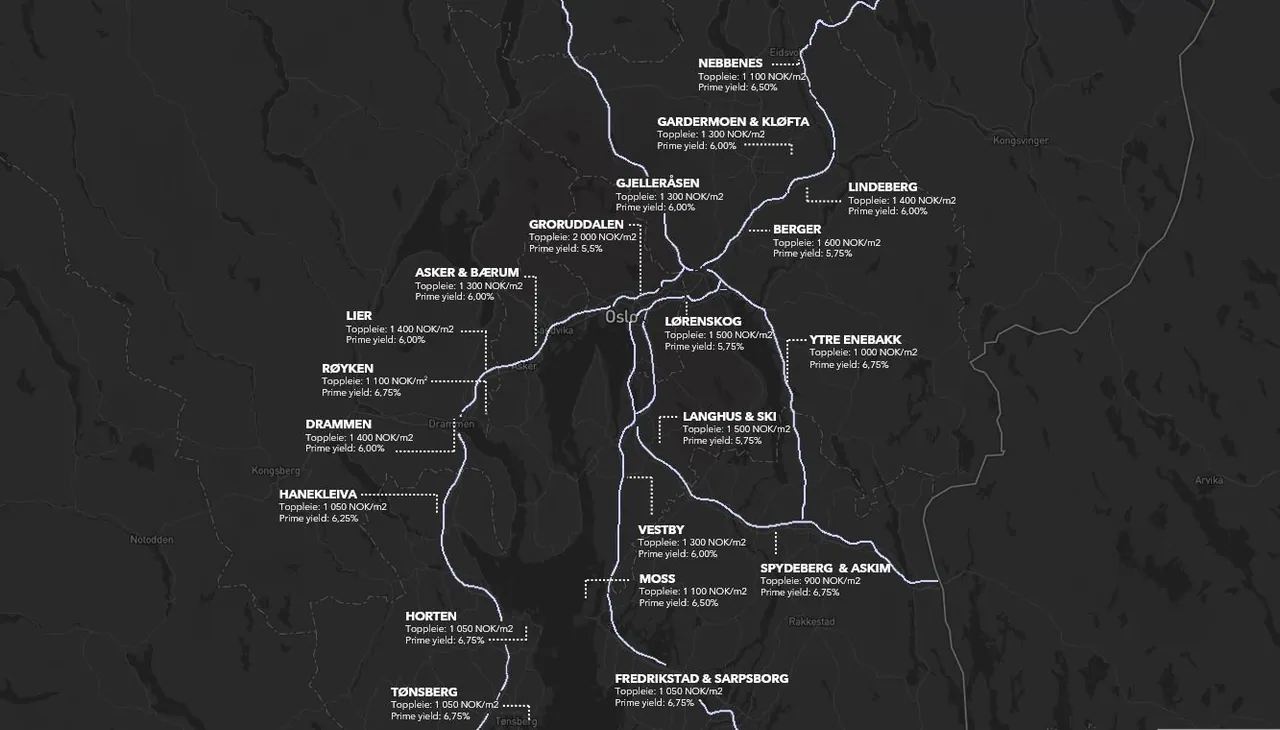
Vacancy in Eastern Norway has stabilised at around 5.3 per cent and is expected to fall slightly through 2026, driven by limited new supply and gradually higher demand.
In the transaction market, liquidity is good, with interest from both Norwegian and international investors. The prime logistics yield is unchanged and remains at 5.5 per cent. Although the segment accounts for a smaller share of total volume than previously, logistics still appears to be an attractive segment given stable cash flows, low structural vacancy risk and a robust demand base.
THE RETAIL MARKET
Developments in the retail sector are two-tiered. The most central locations are experiencing good demand and high rent levels, while more peripheral locations face competition from e-commerce and larger shopping centres. The retail segment nevertheless appears more robust than before, with improved profitability among tenants and potentially higher demand in 2026 as well.
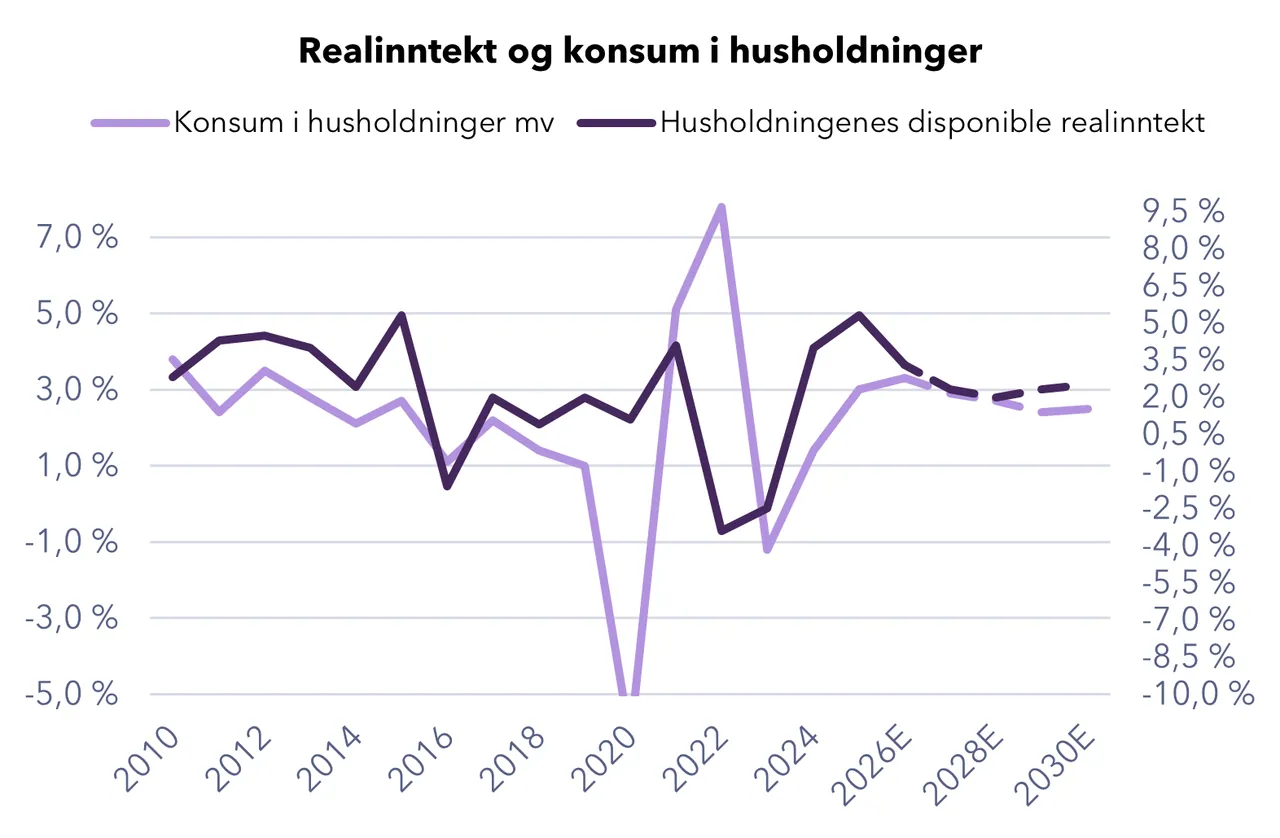
The retail market has developed positively in 2025, driven by increased consumption and improved household purchasing power. Shopping centres are seeing turnover growth, and footfall has picked up, with strong growth in food and beverage and home and interiors. Although consumption is rising, an increasing savings rate indicates that part of the income growth is still going towards building up buffer savings. The outlook into 2026 has nevertheless improved, as lower inflation, expectations of gradually lower interest rates and stable labour market conditions pave the way for continued growth in household consumption.
THE RESIDENTIAL MARKET
The residential segment has established itself as one of the largest segments in the transaction market in 2025. Several major portfolio acquisitions by institutional and well-capitalised investors show that the sector is perceived as attractive. Good access to financing has helped sustain activity among professional players, although high financing costs continue to limit the profitability of new residential projects.
The rental market is tight, characterised by low vacancy and strong rental growth. Changes in the tax regime have made residential letting less attractive, which has led private individuals to sell their secondary homes. At the same time, property owners have used the opportunities offered by the housing cooperative model to divide buildings into units and «break up» apartment blocks. Together with low housebuilding, high population growth and higher interest rates, this has reduced supply and thus contributed to marked pressure in the rental market. Rents have risen most in the central districts, where growth over the last twelve months has been between 5.0 and 7.5 per cent.
House prices have developed moderately through the year, but high interest costs still make it more expensive to own than to rent, measured in ongoing housing costs. Low housebuilding, driven by high construction costs, lengthy zoning processes and increased financing costs, has further reduced the supply side. With expectations of gradually lower interest rates, continued strong wage growth and persistently low housebuilding, prices look set to continue rising in the coming years. However, the large number of rental homes put up for sale in Oslo has contributed to increased supply, which has dampened price growth. Many rental homes are still expected to come onto the market, and this is likely to contribute to lower price growth in the year ahead.